Size Matters: Notes from the Balcony Garden II

In my previous notes on balcony gardening (here), size matters in container gardening which is pretty much the only way to garden if you want to grow stuff and don’t have a yard or land. Container gardening is also helpful if you have a yard but poor soil or no sunny spots where you do have soil. 

Containers allow you to put your plants in the sun on a patio, balcony, deck, or front porch or even move them (within reason). You can extend the growing season by bring cold-sensitive plants indoors for the first couple of hard frosts.

Along with craving large containers full of soil, some plants are hungry for sunlight. Sun is especially important for tomatoes and peppers. Most edible plants need full sun. But there are a few plants that don’t mind a little shade. 

Greens and some herbs can be a little forgiving if they don’t get all-day sunlight. I usually put the tomato and pepper plants where they will get the most sun, then let the other plants fend for themselves with the scraps of sunlight that fall elsewhere.

I tried two kinds of greens this year along with some lettuce and arugula. I didn’t grow tons of any of them. This year was mostly an experiment to see what will grow and what we’ll enjoy.

Greens

Japanese Giant Red Mustard – This is a variety of mustard plant with a reddish tinge on the large green leaves. It’s pretty. One pot looked more like a decorative plant then an edible. The flavor has a spicy mustard kick which I enjoyed. Leaves can be eaten raw in salads or sandwiches or cooked like Southern greens (which will mellow out that kick). 

These seemed to want larger pots. While they want good light, they will bolt in heat. So strong, hot sunlight can make them bolt faster. Bolting is when a plant sends out a flowering stem that will go to seed. Too little sun and they won’t flourish. But a bit of shade from a tomato plant, for example, can stretch the growing season. Once Mustard goes to seed the leafy parts stop growing and get bitter. But the seeds can be used for seasoning or grinding into mustard paste or powder. 

I might have liked Japanese Giant Red Mustard more if they grew well for longer. They were fine through most of spring but were done by late spring and early summer. On the upside some of the seeds self-planted and are now growing in one of the nearby tomato pots. I’ll see how they do. They aren’t very big yet, so they may not get big enough by the time cold weather kills them. 

Swiss Chard – Bright Lights Variety – This is a variety of Swiss Chard that comes in different color variations. Red, yellow, white, and purple stems have green leaves some of which can be tinged with red. Swiss Chard is in the same family as beets and generally tastes like spinach. It can be eaten raw or cooked. Once they get really big, the stems are best cooked. Or you can cut the stem out and use the leafy parts raw. 

Swiss Chard was by far the best surprise of my leafy greens experiment.

I planted these from young plants in early spring and they are still alive and didn’t bolt. They’ll grow bigger in larger containers, but I left one in the small plastic container it came in and it’s not dead yet. So these are hearty plants! (Maybe they’ll just never die.) 

I’ve purchased Swiss Chard in the grocery store, but find that it doesn’t last long in the fridge. That makes growing this nutritious plant extra nice, I just snip a few leaves for sandwiches, adding to salads, or chopping into soup or rice dishes. Plus its absolutely beautiful! 

Swiss Chard can be fairly cold tolerant (I think), so I’ll see how long it lasts with winter soon upon us.

Young Swiss Chard and a mustard plant that had already bolted by late spring.
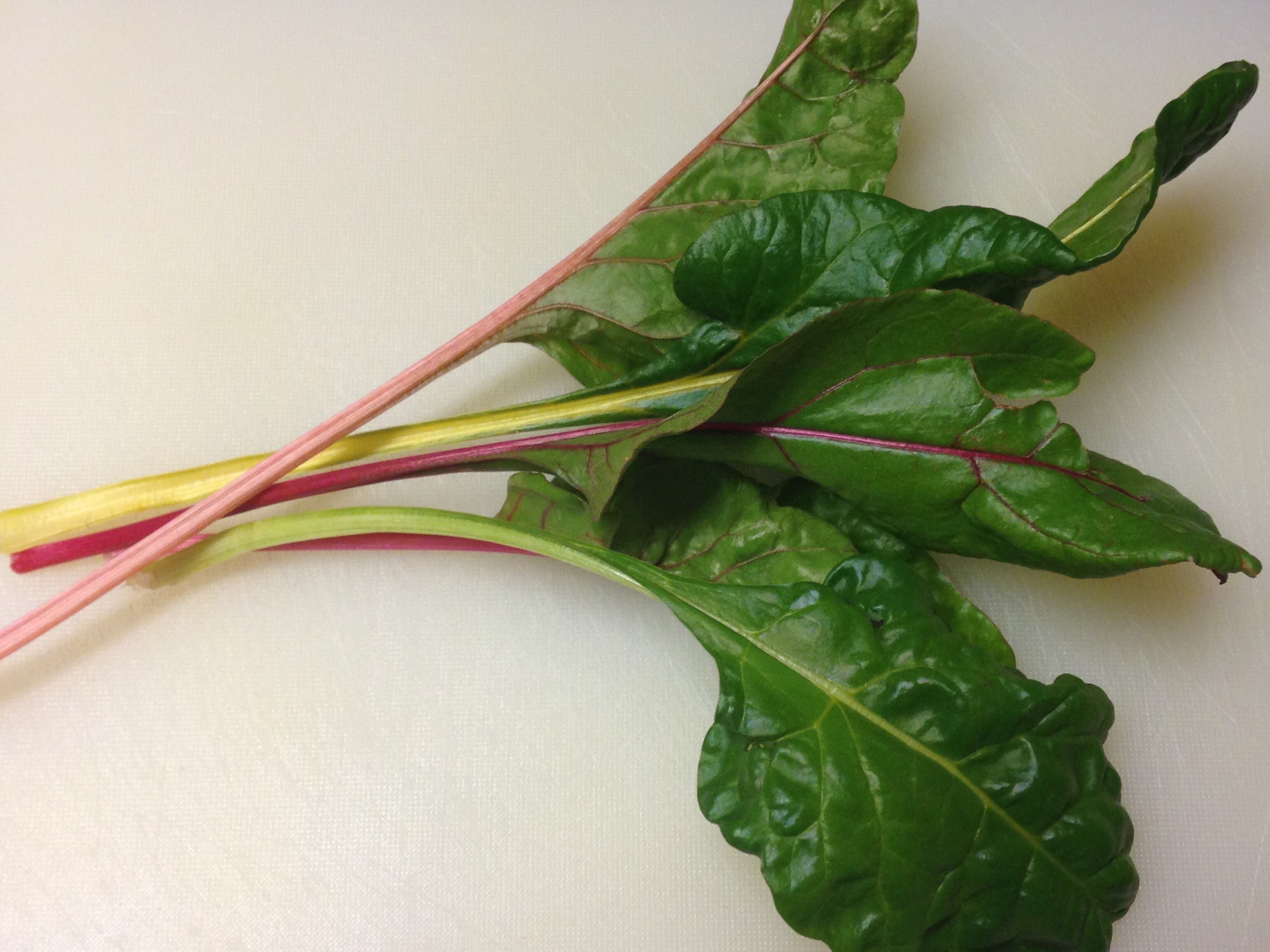

it’s not dead yet. Swiss Chard picked today.


Additional posts will cover herbs, lettuce, and arugula.

Size Matters: Notes from the Balcony Garden I

There’s a little spark of life still shimmering in my balcony garden. So I’m keeping a few notes on what worked well. Next spring I may need a reminder.

By default the balcony garden is a container garden. Some plants are better suited to container gardening than others. Size matters — both the size of the container and the kind of plant.

Overall, I used larger containers this year than last. That makes a difference. Plants like to stretch out their roots and get comfy. Not only do plants— peppers, tomatoes, leafy veg or herbs — grow larger and produce more fruit  in larger containers, the soil will not dry out as quickly on a hot day. That can be a big thing.

Once some plants totally dry out, they may not come back. Also, blossom end rot (not a good thing) is more likely if the soil dries too much between waterings.

I don’t have a hose on my balcony, so I carry water in large jugs or let Mother Nature’s rain give the plants a good drink. Plants in larger containers can take more total water per watering, but they need watering less often. After a good rain, many of them can go for days with no extra water. (My arms get a good workout when it’s dry out.)

Tomatoes really benefit from a large container. Comparing last year’s plants to this year’s, I got more yummy tomatoes from fewer plants. So if the choice is more plants but smaller containers or fewer plants and larger containers, you’re probably better with larger containers.

Home-grown and vine-ripened make such a huge difference in the juicy, sweet and tangy taste of a tomato. Grocery store tomatoes never come close (except a few heirloom varieties if you can find them). Farmers markets can have good ones, but around here, those aren’t cheap.

Tomato varieties that don’t grow as large are probably going to work better on a balcony, but that doesn’t mean you can’t try.

Patio Tomato is a variety of tomato plant specifically hybridized for containers and small spaces, but I’ve never been quite as thrilled with the taste or the quantity. Celebrity Tomato plants grow well in containers, produce more fruit, and taste excellent.

Cherokee Purple tomatoes taste great, but want tons of space. My plant last year was fairly healthy but grew only four nice tomatoes. It was a lot of work for four tomatoes. I’m better off buying Cherokee Purple tomatoes at a farmers’ market. I left them out this year.

Sun Gold cherry tomato plants can get quite large. Huge even. Stretched upright, my plant this year would have reached all the way to the balcony above us. I had to tape part of it to the wall to keep it from taking over. I’m sure it might have been happier in the ground (or in an even larger container), but it still produced a lot of super tasty cherry tomatoes. That was fine. So, I think cherry tomato varieties are a little more forgiving for containers.

Sun Gold cherry tomatoes.

Peppers (hot or sweet) generally grow pretty well in containers (larger is still better). But there isn’t as much difference in taste between home-grown and store-purchased. So I love other things about growing peppers — like being able to just walk out and pick a pepper. It’s nice to see them grow and know that I used only a little soap and vigilance to keep pesty bugs away. Picking them at the peak of ripeness can still provide some amazingly sweet and flavorful peppers. I also like growing hard-to-find peppers that I know I’ll eat.

We liked Gypsy Peppers again this year (though one plant seemed a little different and may have been mislabeled).

Cow Horn Peppers were a huge hit for the hot stuff. They grew lots of beautiful, twisty, flavorful, larger, hot peppers. I would so grow these again.

Garden Salsa peppers weren’t quite as impressive, but they were fine for a pepper with less heat.

Dragon Cayenne was another good one. The smaller plant seemed fine in a not-huge flower pot and the little peppers had nice heat and flavor.

We generally like jalapeños and did again this year. They like a larger pot for good numbers. They still grow okay in a smaller pot, but the quantity is greatly reduced.

Cajun Bell peppers looked almost like habaneros, but weren’t as hot. They were thin-walled, and not as convenient to slice as some of the other varieties. I may or may not grow them again. But they were cute.

.

Hot stuff – Cow Horn peppers.

Next I’ll cover leafy greens and herbs.

Thanksgiving 

On this day of eating lots of food with friends and / or family, I wish everyone much good food and plentiful friends and loving family. May we all have much to be thankful for today and all year. And may we have the wherewithal to give thanks. 

We ate food at my mom’s. The five of us ate food until we felt like we would burst. My stepdad usually cooks the turkey in an old, plain white T-shirt to retain juices. It sounds weird, but always tastes delicious as does the stuffing and giblet gravy (which weren’t cooked in a T-shirt). The sweet potato casserole was dotted with marshmallows and just enough seasoning (brown sugar and vanilla extract) to be super yummy. We made the green bean casserole — our favorite variation with diced water chestnuts. 

Then, when we felt like we could hardly eat another bite, we had pumpkin pie.

While we’re sad about the recent loss of our kitty, we had much to be thankful for. Earlier in the day I did some cleaning and even wrote some words for NaNoWriMo. It was good. 

Tea for Tuesday (on a Wednesday) – Just Peachy III

With Thanksgiving upon us, everybody is probably thinking about food, but maybe not about beverages.

Ice tea is a good classic beverage option. It can be made from scratch for pennies per serving, and it’s a lot more elegant than a glass of sofa pop next to a plate of turkey and all the trimmings.

Here’s one way to make classic sweet iced tea. Click here.

A variation is fruit tea — peach tea is one of my favorites. Click here for that. Include cranberry juice for a Thanksgiving variation

But if you find you have zero time for either of those and want to offer something other than soda pop, fruit juice, or milk, then powdered drink mixes might work.

I tried a lot of powder drink mixes over the summer in my search for a perfect peach tea. (And for convenience because sometimes, I just don’t have time for anything else.)

While scratch is oh-so hard-to-beat, there are some drink mixes that I actually enjoy. The iced tea drink mix that came out on top for me was Crystal Light Peach Iced Tea. I tried many others. I’m not always a fan of Chrystal Light. But this Peach Iced Tea won me over because I can taste the tea and the peach. It has a light, refreshing flavor with enough tartness to taste fruity without overpowering the flavor of the tea or peach. Some mixes add so much malic acid, that it’s hard to taste much else. Those tend to taste tart and nonspecific fruity.

Crystal Light Peach Iced Tea is a sugar-free option that uses artificial sweeteners (Aspartame). That may scare some away (and make others happy). If you don’t drink aspartame, this isn’t the drink mix for you. It nearly kept me away, but in the end that nice peachy tea taste won me back. But I’m hoping they come up with a version using Stevia.

Crystal Light Peach Iced Tea is available in boxes of single-serving, on-the-go pouches or pitcher size packets. Either one is handy in a pinch.

(Balcony) Garden Variety Magic

The WordPress Daily Post’s photo challenge for this week is Magic.

When sunlight kisses green leaves… There is no other logical explanation for the resulting glow. Magic.

Water, air, sunlight, and living soil. Seeds. Combined, green stems push through and leaves burst forth. Flowers follow. Then a bulge of fruit swells and ripens.

The magic of mother nature, God, and living things and sunlight.

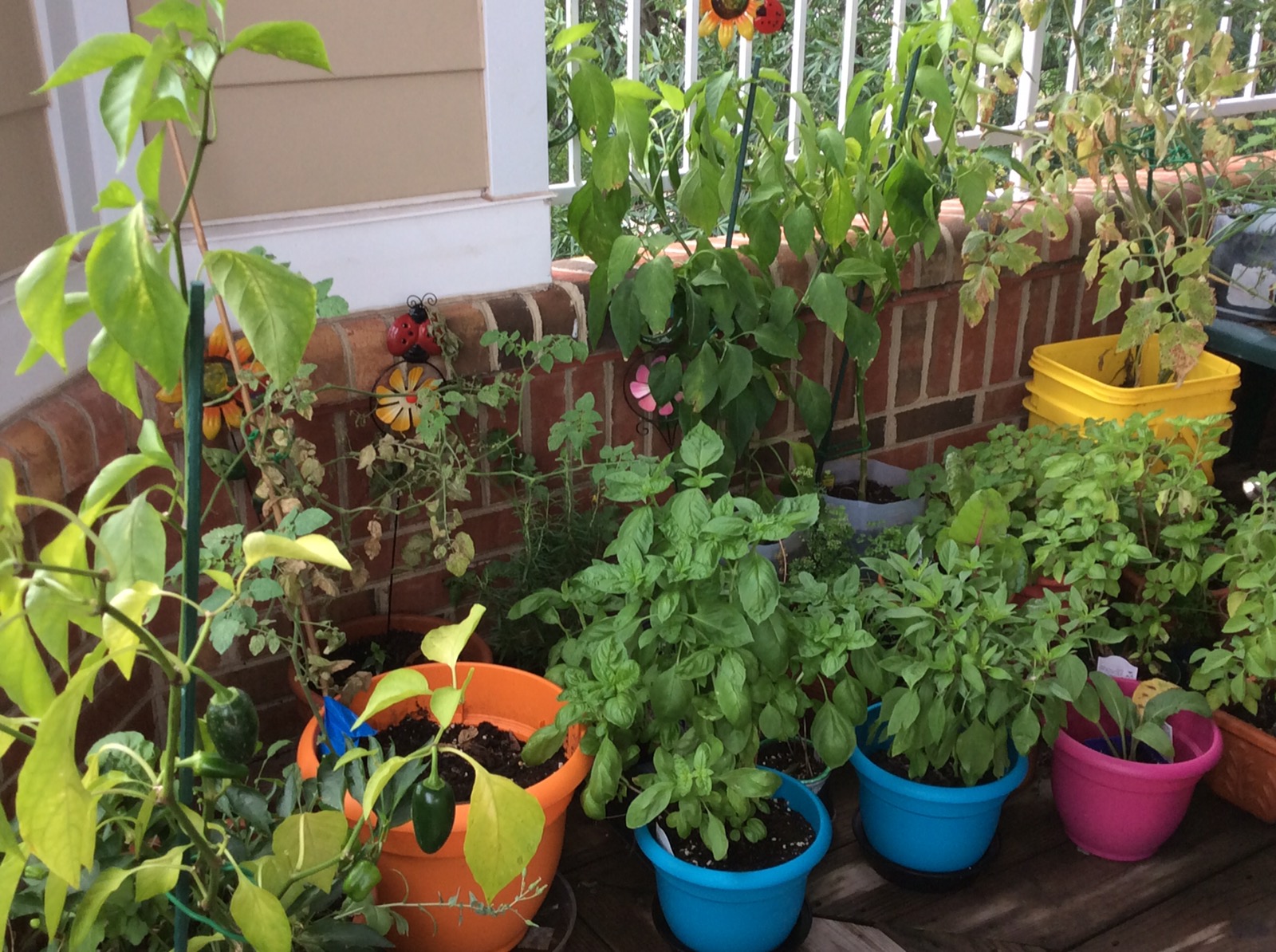
I had a balcony garden again this summer.

img_2540

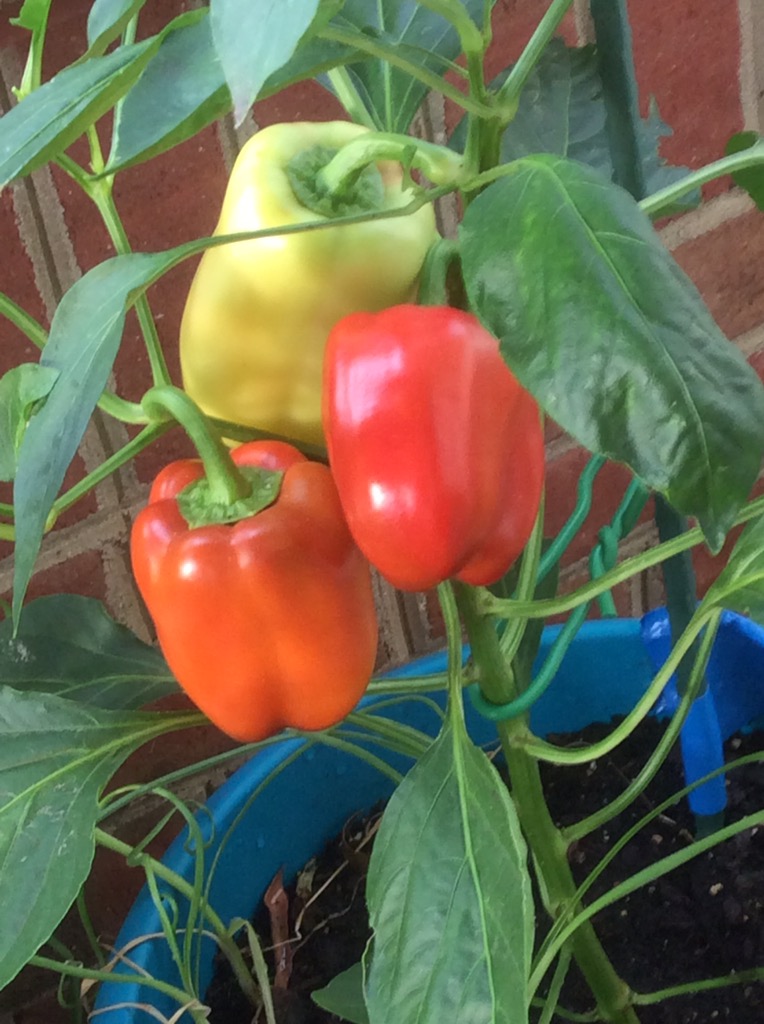
The glowing leaves. The tasty peppers.

img_2336

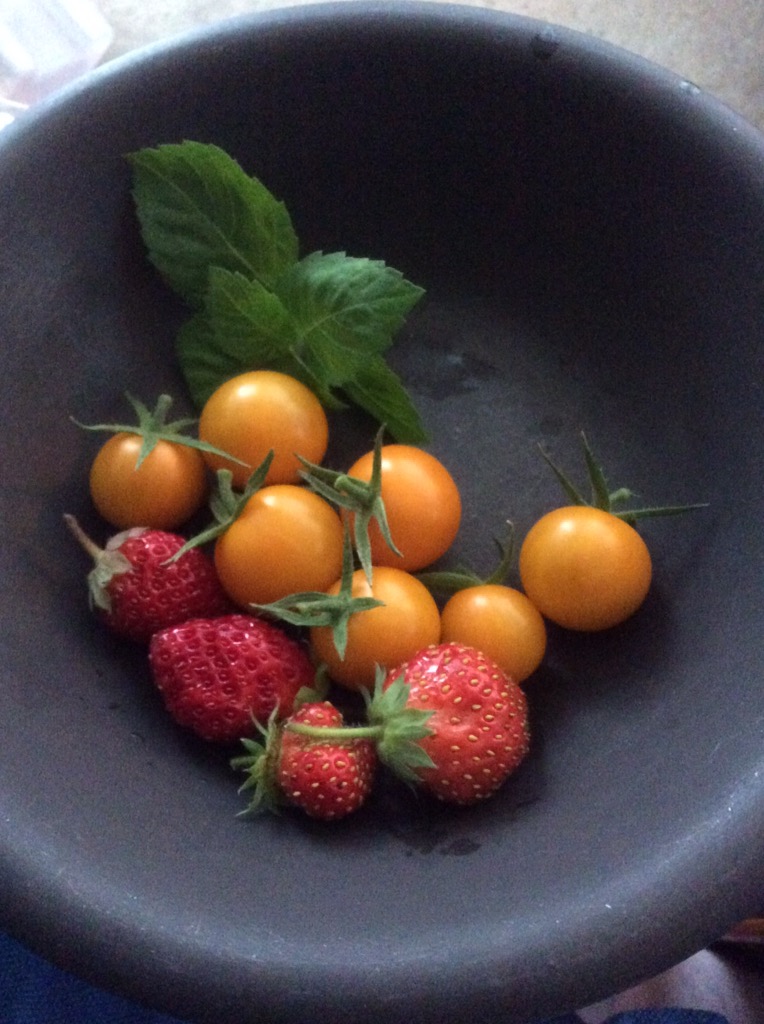
Sun Gold, Orange cherry tomatoes and powerful strawberries.

img_2387img_2409img_2441img_2557-1

It’s not dead yet even with last night’s frost. The balcony stays a bit warmer. Though most plants are limping. They’ve reached the end of the marathon still bearing a few small fruits across the finish line. Some plants tripped and fell on mites. They didn’t fair so well.

Dragonflies visited again this year. They are always welcome to perch and rest. I get to see their wings sparkle. An insect that looked like a leaf was here too. He was new this year.

img_2517

It’s a leaf. It’s a bug. It’s leaf bug. Greetings friend. (At least he seemed friendly.)


A squirrel with more gusto than his pals made the giant leap from a nearby tree to our balcony. We scared each other. He leapt back to the tree nearly missing his branch. And the sway nearly launched him back. It’s not an easy leap. I’m glad he didn’t eat many of the tomatoes. One year they ate them all. Every single one.

Somebody visited again recently. A squirrel? A bird? I only saw evidence. Not the critter. A pumpkin had been nibbled.

img_2743

Nibbled pie pumpkin and winter squash. (I didn’t grow these, but I like them.)

This post was also for NaBloPoMo Day 21.

 
NaBloPoMo November 2016

Let That Percolate 

The WordPress Daily Post’s Daily Prompt is Percolate.

Percolate seems like such a lively word to me. Something will always happen if you let it percolate for a while.

My grandparents used to percolate coffee. They had a metal pitcher (the coffee pot or coffee percolator) with a metal basket and filter inside. At the top sat a lid with a clear knob which gave a view of the coffee once the water started to boil. Liquid popped up and down. 

The water was only lightly colored at first, but by the end they had rich dark coffee bubbling up inside, dancing away. It looked like it was trying to escape so many times over. One time it did. The lid popped off. 

Let that percolate in your thoughts for a while.

Sweet and Tart and Vegetal; I’m Your Garden Huckleberry 

For Novemeber 15, the Wordpress Daily Posts’s Daily Prompt is Tart.

This post also uses the Daily Post’s prompt from November 10, so I’m adding that. That Daily Prompt was Vegetal.

Both of these prompts work well to describe the second food experiment we did over the weekend. The first was the squash.

The next food experiment involved berries called Garden Huckleberries.

Raw, ripe Garden Huckleberries.


If you’re familiar with regular huckleberries, then you might think, “oh, yum.” I’ve had true huckleberries in Montana, and they are similar to wild blueberries. Sweet and very yummy.

The Garden Huckleberry is different. It’s a nightshade plant similar to tomatoes.

I think I may have had some of these self-plant in flower pots a few years ago. Once I identified them as from the nightshade family and realized they weren’t tomatoes or peppers, I wasn’t really sure if they were edible, and I pulled them. They were probably safe if birds left the seeds behind (which is probably how the seeds got there), but I didn’t want to take any chances.

These Garden Huckleberries were grown by a farmer, and I purchased them at a farmers’ market. So I felt pretty confident that we could eat them.

But they did come with special instructions, and I looked them up on the Internet at home.

Garden Huckleberries must be cooked before they are eaten. They also need to be fully ripe (the green, unripe berries are toxic). Raw they taste a little like a green tomato, except I’d prefer green tomato to the taste of a raw Garden Huckleberry. They weren’t just tart or sour, but also bitter with a strong, unpleasant vegetal flavor.

After removing the tenacious little stems from the Garden Huckleberries, we boiled them in enough water to cover and added a pinch of baking soda (per many instructions).

Blueberries and red cabbage both contain pigments called anthocyanins that change color depending on the pH. It’s redder in acid and turns bluish-green or green in alkaline (basic) solutions. It can be fun for at-home science experiments and can even be used to dye Easter eggs.

Garden Huckleberries have an abundance of anthocyanins.

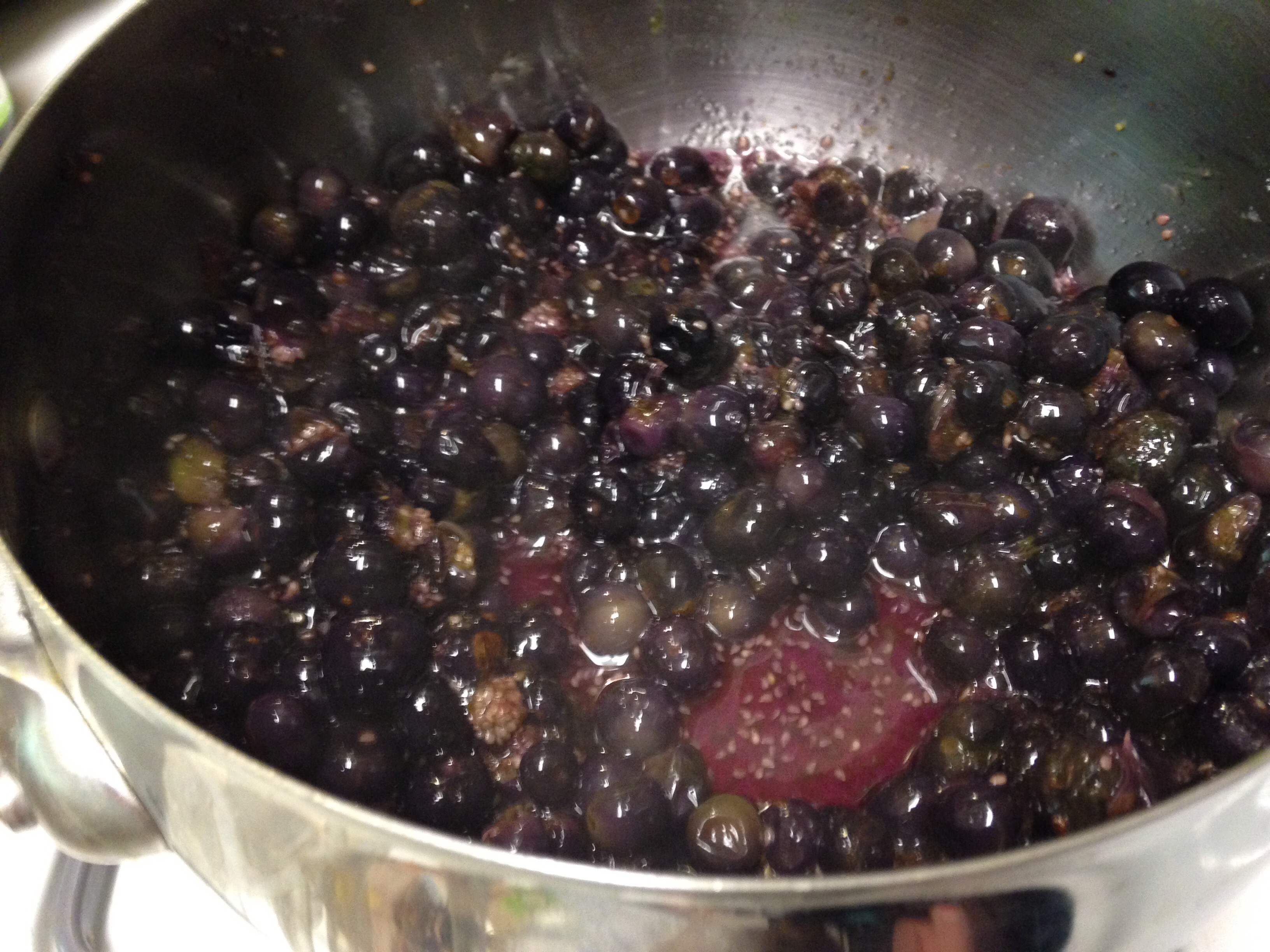
So we got a little surprise as the water with baking soda boiled away. Green foam began to form on top of the water. And as the berries continued to burst, dipping a spoon into the water showed us a vibrant blue-green water.

As Halloween is not long gone, it felt like we were cooking up a strange and exotic witches brew that might be used for unsavory purposes. You might think I wouldn’t let that stuff anywhere near my mouth.


But we kept on.

Recipes for Garden Huckleberry all suggest adding lemon and sugar, so that’s what we did after straining out the creepy green water from boiling the berries. (And after doing a mini-science experiment before throwing all the fascinating water away.) Red cabbage can be these same colors. 

I tasted the cooked berries before adding the lemon and sugar and was not impressed. They were still somewhat tart, bitter, and vegetal tasting but much less so than when uncooked. Now they had a hint of berry taste & aroma to them. So we were getting closer.

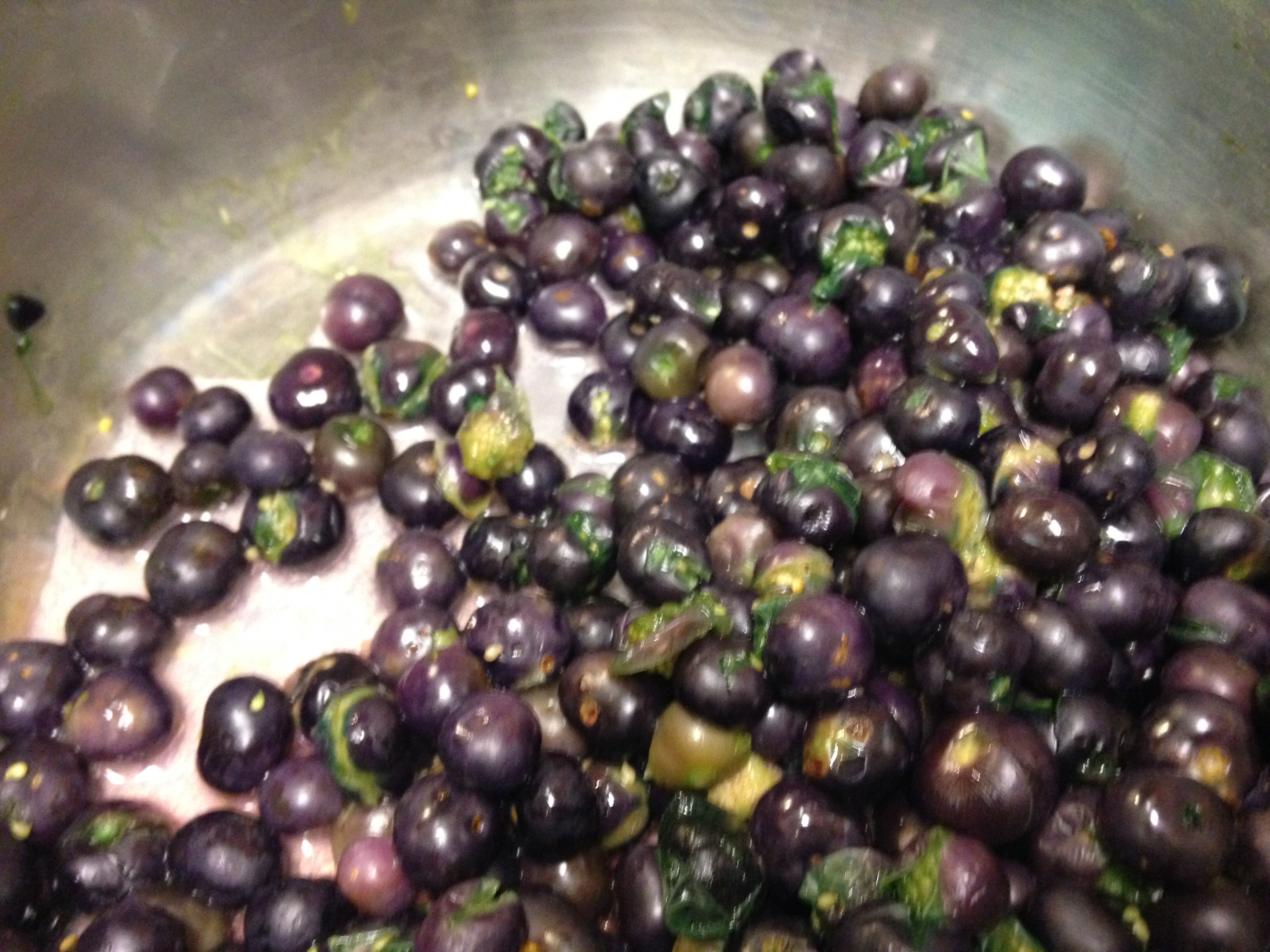
Garden Huckleberries parboiled with a little baking soda.

Then we added the sugar and lemon juice and let them simmer away again. Adding the lemon juice turned all the greenish shades back to a reddish purple. The berries became a beautiful, deep, dark purple.

Now when I tasted them, some of them were delicious and others were still a little off. I’m pretty sure the best tasting ones were the most ripe berries that had also burst very early in cooking. While the ones that weren’t as good were either less ripe or didn’t burst (or both). Regardless, I decided to add more lemon juice and sugar and simmer longer.

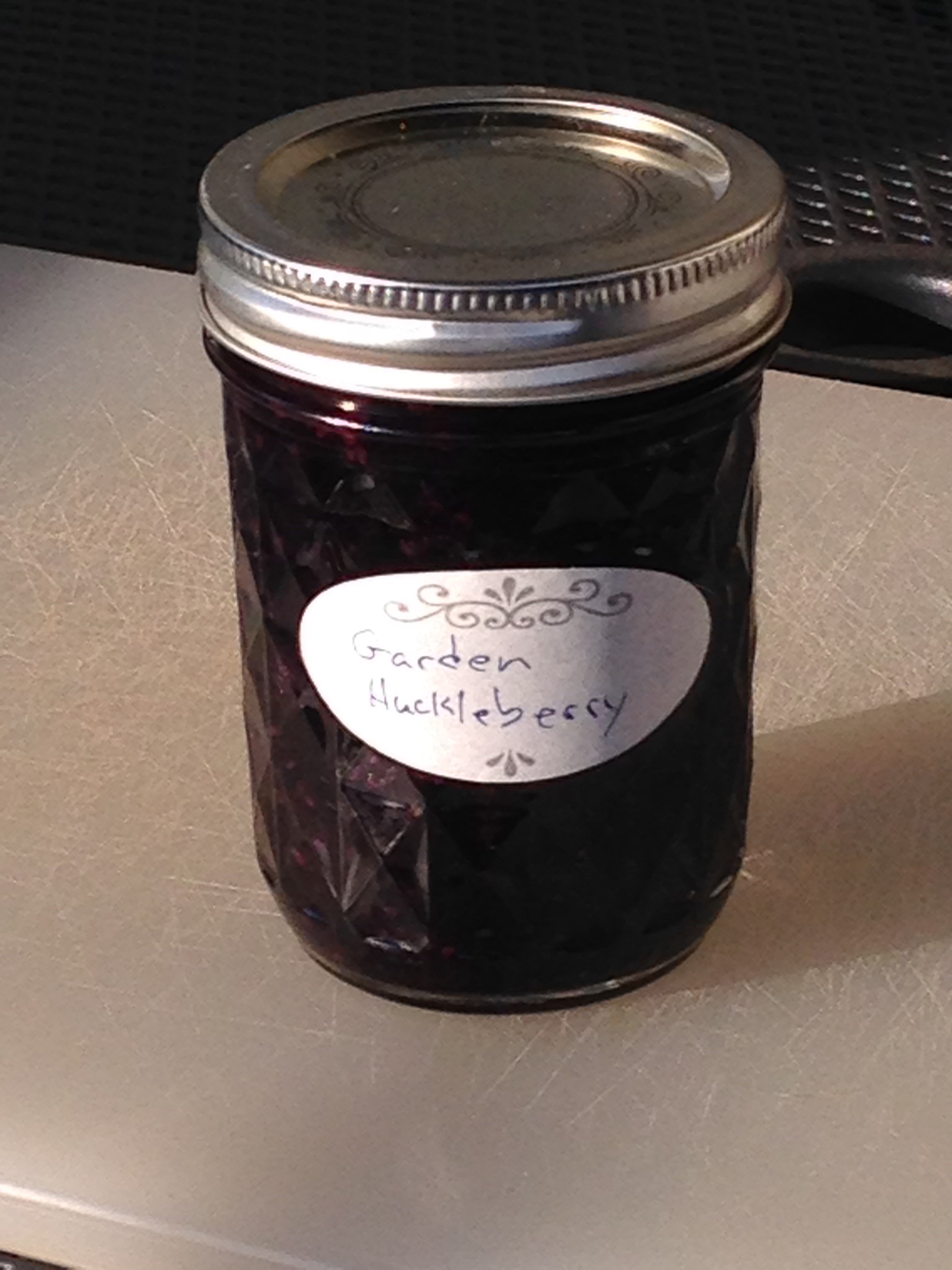
The end result was fairly close to a fruit preserve or pie filling. It tasted a little like blueberries, but also had its own sweet & slightly tart berry flavor.


The longer we cooked with lemon and sugar the better they got. It wasn’t just covering up the weird taste. The end result didn’t taste like lemon really. But I think the combination of lemon juice and sugar transforms some component in these berries, so that the flavor actually changes. 

So Garden Huckleberries were good. We put the goop in jars. I may add some to a pie or fruit tart. I’m not 100% sure if I’ll get them again. I like berries that I can eat raw. But these were fun to try and the colors (all of them) were pretty amazing.


This post is also for NaBloPoMo.

NaBloPoMo November 2016

Squashed

Oops! I was trying a new squash, and there was a little incident.

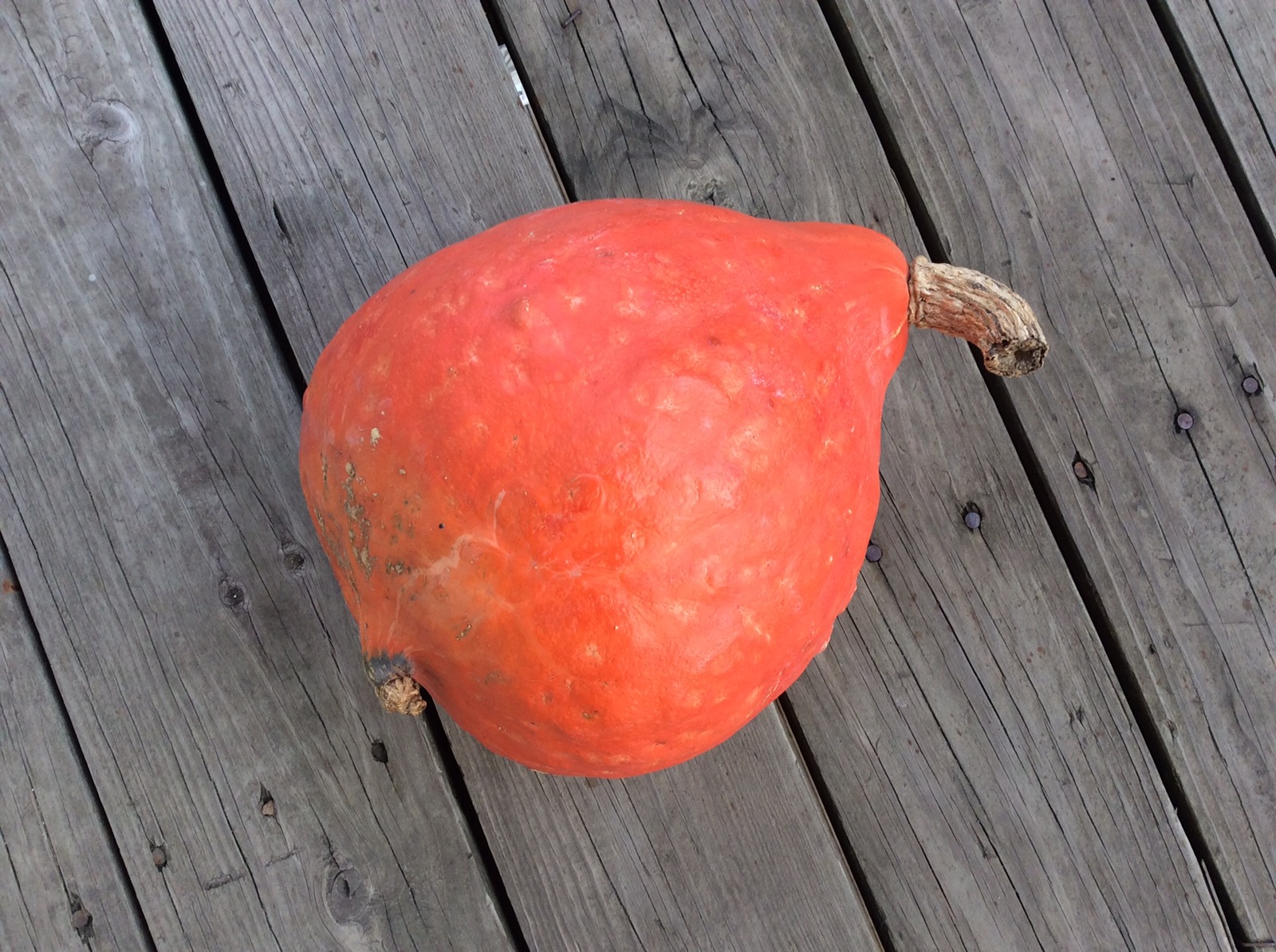
This was labeled a Kabocha squash, but I’m pretty sure it’s a Red Kuri or orange Hubbard that had been mislabeled.

Kabocha have a fairly soft skin. Hubbards (and Red Kuri which is related to a Hubbard) do not.

The soft skin of the Kabocha allows the skin to be eaten once cooked and also allows the squash to split open easily so that pressure doesn’t build inside if, say, you put it in the microwave.

I tried my first Kabocha squash this fall. The local H mart had a great sale, and I was looking to try a new winter squash. 

Kabocha are wonderful. They’re sweet, flavorful, and dense. If you’ve never tried one and you like winter squash, this is hard to beat.

A few years ago, I started partially cooking winter squash in the microwave before slicing it open and scraping out the seeds. I poke a few holes — a lot easier than trying to cut an entire stubborn squash in half — then pop it in the microwave for 3-6:00 minutes. This softens the squash enough to cut a lot easier.

Then seed and cook the rest of the way in the microwave or roast in the oven.

So I was trying to soften this new squash which had been labeled Kabocha. I thought maybe it was an orange Kabocha. (I’ve only cooked green Kabocha so far). I’m not an expert. What do I know?

I could tell the shape was a little different. 

Another name for Kabocha squash is Japanese Pumpkin. They are shaped like a squat pumpkin and have dark green or deep orange skin. This new squash, however, was somewhat teardrop shaped — a shape much more common to hubbard or (I would learn) red kuri squash.

I only managed to poke just one smallish hole in this squash because it was one tough cookie, er, squash. I thought it would be fine. All the other Kabochas have been fine.

Then I put it in the microwave for about 6:00 minutes because I figured it was pretty big (and three minutes didn’t seem to have done much to soften it).

It was that second half of the time that did me in.

“Boom,” I heard from the the kitchen.

Then I heard the sound of the glass base rocking in the microwave. I hoped it hadn’t broken.

It turned out that the skin on this squash was hard, tough, and thick (even once cooked). It held the steam rather impressively even with the little hole bubbling a little.

The squash had exploded. The plate and microwave glass were fine, but squash guts were splattered all over in various sizes. I had a quite a mess to clean up … after I got done laughing.

Oops.

My family laughed too. Then my daughter helped me clean the squashed squash from the inside of the microwave.

(I once exploded an egg in the microwave on purpose. It was for science. Luckily the squash was much easier to clean up.)

This squash tastes quite yummy, but does not appear to be a Kabocha squash. So my guess is it’s a red kuri or orange hubbard.

Part of this bright orange exploding mystery squash (the parts that weren’t plastered to the inside of the mircrowave) went into a roasted veggie mixture. The rest went into a lovely squash soup (just bouillon and pureed squash). Yum.

I purchased two of these and the next one is even larger. So I better poke much larger holes — several of them — or watch out.

The Week

It was a busy week. With the election on Tuesday, I got up early to vote. Then, like a lot of people, I didn’t get much sleep that night. I dozed, looked at incoming election results, then woke up. Then dozed a little more. It was very surreal.

Wednesday, I had a meeting at my daughter’s school. So there I was talking with her teachers, and so very tired. Though, I think we were all a little tired. The teachers had very nice things to say about my kiddo, and I’m very proud of her.

Thursday,  before work I took the cat to the vet to get his blood drawn. Then dropped him off at home before I went to the office.

My daughter had Robotics club after school, so I had to pick her up.

The school was having an International Night that evening. Since it started several minutes before I arrived at the school, my daughter was already in line to sample the many tasty foods, and I went inside to see what it was like.

I’m so glad we went in. International night was really cool. Our area has students from so many places. We got to taste foods from around the world.

One of the desserts was called, Casery (maybe also spelled Kesari). It was from India and flavored with cardamom. It was different but yummy!

Then we saw a video the students made and watched part of a talent show the students performed.

Then I had pinball league. I stayed awake enough to play a few good games. Yay!

I came home and tried to blog. I. Was. So. Tired.

I kept typing and falling asleep mid-sentence. And I kept typing the wrong thing. Finally, I managed a couple of tiny sentences and was done.  I had to count that as my NaBlogPoMo.

Friday’s blog post didn’t go much better. I was so tired. But I was a little peppier since we got good news about our little old kitty cat. He’s a lot better. That made me happy.

Today is catch-up day … for many things. Laundry. Groceries. Blogging and writing. Resting. But still driving my daughter to and from places. At least I’m getting a few of these done.

Wishing everyone a great weekend!

NaBloPoMo November 2016

NaBloPoMo Day 4, Wax update and Patti LaBelle Pie

Well, I’m may not be posting my Day 4 post before midnight on the East Coast, but I posted an update about Glade wax melts to another post well before midnight on Day 4. I think that will just have to count. See my updates to the Glade Winter Scents by clicking here. Maybe I should have made the wax melts update a separate post. And technically, I’m posting this post before midnight Chicago time so …  maybe this counts for Day 4 too. (Gah, long week. Want sleep. Started to doze and bolted awake at 12:00 because I knew I needed to post.)

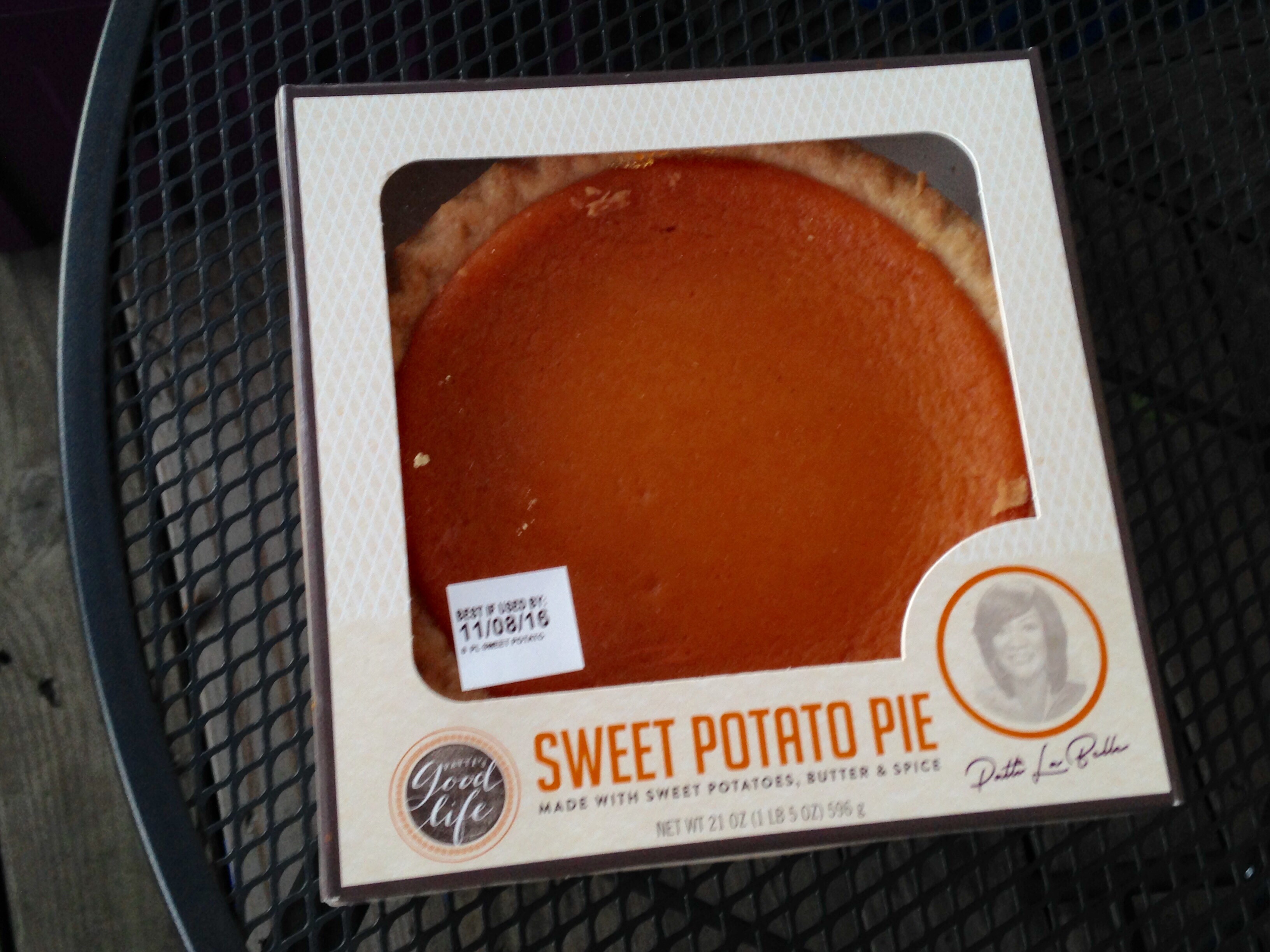
My topic for the rest of the Day 4 post is just a simple post on pie. In this case it’s the Patti LaBelle Sweet Potato Pie. Maybe you’ve heard if it.

I work very close to a Walmart. Last year I saw the Patti Labelle Sweet Potato Pie in the store but didn’t buy any. Then I read about the internet sensation of YouTube personality  James Wright Chanel reviewing, eating, singing, and praising the Patti LaBelle Sweet Potato Pie. See that on YouTube by clicking here. By the time I thought, “Hey, maybe I should try it,” there was no more Pie to be had anywhere. Pies flew off the shelves after that YouTube video.

So this year the pies are back! I love pie and had to taste one. Is it worth the hype?

Yes and no.

The pie filling is quite good for a grocery store pie that costs under $4. It is a beautiful vibrant orange. It’s a brighter orange than pumpkin pies, but might otherwise be mistaken for one.  The pumpkin pies nearby looked almost sickly and anemic in comparison. The Patti LaBelle Pie is even prettier than a lot of other sweet potato pies I’ve seen in stores.


The flavor is also similar to pumpkin pie. The packaging on the Patti LaBelle Sweet Potato Pie says it is made with “sweet potatoes, butter, and spices.” Many of those spices are the same as pumpkin pie, but the ratio is a little different. So this has its own flavor too. This pie is well spiced and somewhat sweet. 

While pumpkin pie filling has a texture closer to that of custard. This pie is somewhere between custard and sweet potato casserole in texture. It’s like a brighter, slightly starchier-textured, first cousin of pumpkin pie. Everybody thinks they look alike. But they are also unique.

As far as nutrition, the Pattie LaBelle Sweet Potato Pie has some vitamin A and iron as well as fiber and protein. Nutrition value in pumpkins pies is similar. The downside is that both are loaded with saturated fat. (There are some pumpkin pies out there that somehow avoid having much vitamin A but I don’t know how.)

The Patti LaBelle pie slices beautifully. It’s not runny and not dry.

The pie crust is where this sweet potato pie comes up short. It isn’t the light, flaky crust you’d expect in a homemade or gourmet pie. The texture and flavor ring “grocery-store prebake.” It’s not horrible, but this pie would be amazing in a flakier crust.

But it is still beautiful and the filling is really good if you enjoy that kind of spice. The price is very nice too. So I can live with the crust for now. Our pie will get very well eaten.

And it has.

It was yummy!


NaBloPoMo November 2016

Previous Older Entries Next Newer Entries